
夜线
缓冲迅速耗尽!汇丰警告:新一轮全球粮食危机要来了_我的网站

A |
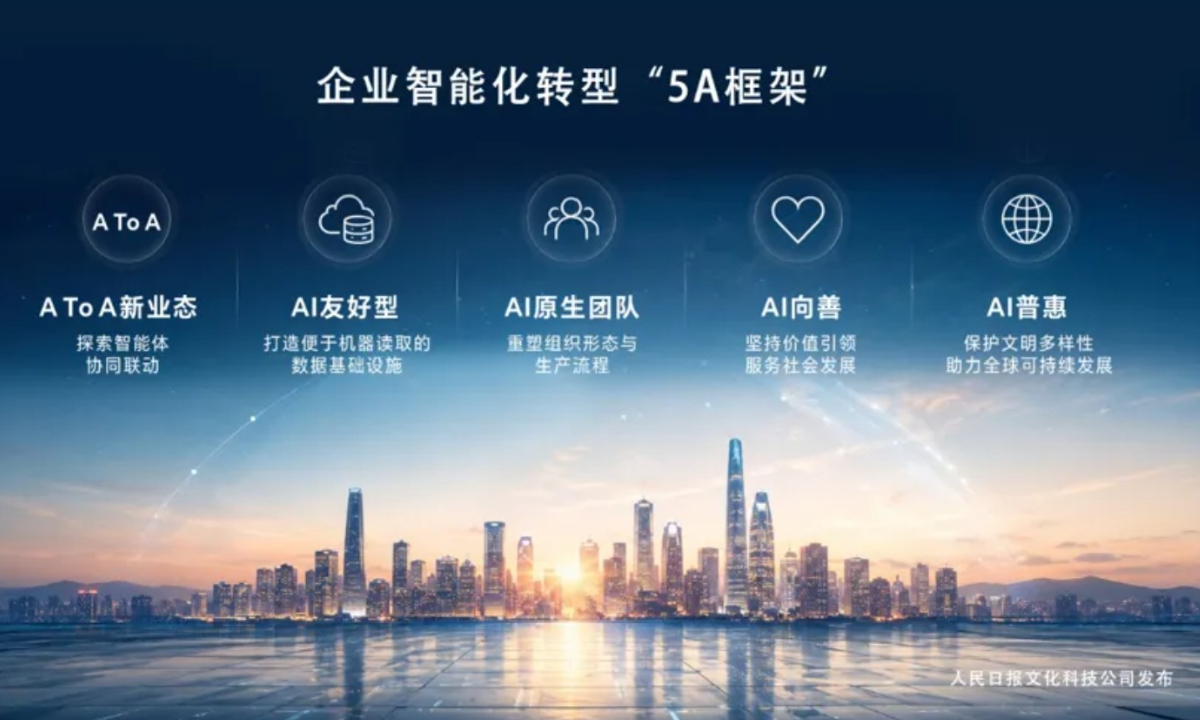
The 2026 Digital Intelligent Economy Forum was held in Langfang, North China’s Hebei Province, on Wednesday. At the forum, organizer People's Daily Cultural Technology Corporation unveiled a “5A Framework” for enterprise intelligent transformation, aimed at helping businesses comprehensively innovate their business models, organizational structures and service systems in the artificial intelligence (AI) era.
A To A: Exploring new models for agent collaboration
AI is pushing the internet into a new stage characterized by the widespread participation of AI agents. In the future, China could develop an ecosystem comprising tens of billions of agent applications, while the global “digital population” could reach hundreds of billions. Following To B (business-oriented) and To C (consumer-oriented) models, enterprises and institutions should actively explore the emerging To A (agent-oriented) model. To enable better interaction and coordination among agents, unified data, technology, interface and service standards need to be established, while new business systems and service models should be cultivated.
AI-friendly: Building machine-readable data infrastructure
Today’s internet user interfaces are primarily designed for human browsing. The first step, therefore, should be to build an “AI-friendly” data system that is better suited to being read, understood and accessed by AI. By structuring content resources and turning them into organized knowledge, while strengthening ontology systems and knowledge graphs, such a system can improve AI’s ability to understand and apply information. On this basis, integrated hardware and software infrastructure combining computing architecture with data systems can be developed for AI applications.
AI-native teams: Reshaping organizations and workflows
AI is profoundly reshaping organizational structures and ways of working. AI-native teams should redefine job responsibilities, organizational structures and business processes around the A-To-A model and AI-friendly services, enabling “everyone to have multiple AI agents.” Professional capabilities and business experience can be encapsulated into “digital employees,” promoting autonomous learning by agents, multi-agent collaboration and the evolution of collective intelligence, thereby multiplying per-capita productivity.
AI for good: Putting values first, serving social development
AI also requires values-based guidance. Guided by the principle of “being people-centered and using AI for good,” efforts should follow the approach of “governing AI with AI and guiding intelligence with wisdom,” ensuring that AI always serves social development, the public interest and people’s needs. The “Mainstream Values Corpus,” whose development was launched by the People’s Daily in May 2023, has already begun to take shape and has been validated through numerous large-model applications.
Inclusive AI: Protecting cultural diversity, advancing global sustainable development
AI should not become merely “a game for rich countries and rich people,” but should benefit all countries. Efforts should be made to actively participate in global initiatives for inclusive AI, bridge the digital and intelligent divide, and enable more organizations and individuals to share the benefits of development on an equal footing, so that AI can truly become a powerful positive force for improving the well-being of all humanity and advancing human civilization.
This was translated and compiled by the Global Times, based on an article originally published on people.cn on August 12, 2026.
。 随着全球农业供应链深处多重风险加速交织,华尔街投行近期正接二连三地发出重磅预警:一场跨度更长、波及更广的全球粮食危机风险已然悄然积聚,并即将迎来彻底爆发的“风暴时刻”。 上周,摩根大通分析师已发出了“明年或爆发全球粮食危机”的警示。而汇丰银行分析师在本周二的最新报告中亦敲响警钟,指出谷物供应趋紧、厄尔尼诺现象、海上航运要道受阻,以及由此引发的供应挤压,正推高谷物价格。
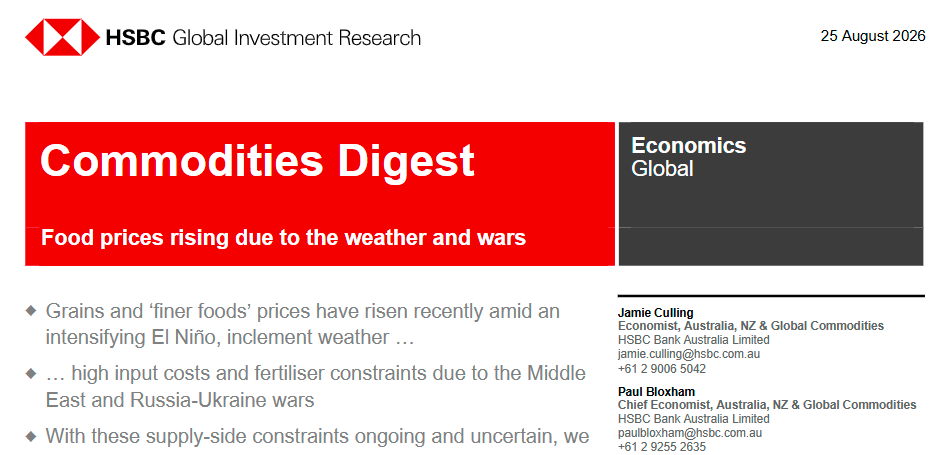 汇丰银行主攻澳新地区及全球大宗商品的经济学家Jamie Culling在周二发布的研报《天气与战争推高食品价格》中指出,这种供应挤压已在现货市场显现。截至7月,涵盖小麦、玉米、大麦和稻米在内的谷物整体价格同比上涨了22%。
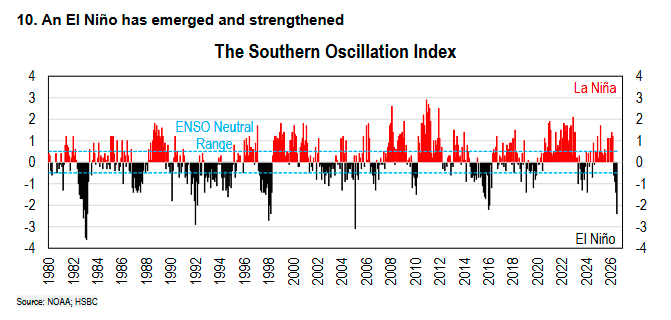
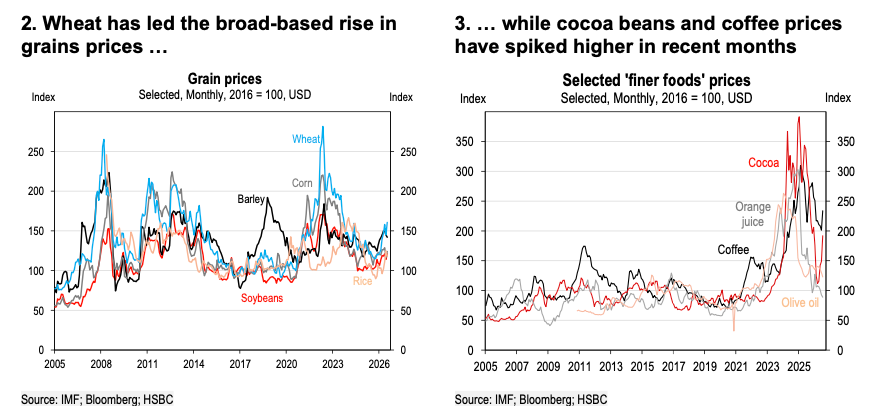 “今年年初充足的供应和库存曾有助于抑制价格飙升,但这一缓冲现在正开始迅速耗尽,”Culling向客户发出警告。 农业供应链面临多重冲击 Culling指出,农业供应链正面临多重冲击,包括中东冲突的影响、近期俄乌战争的升级,以及极端天气事件——如北半球热浪和日益加剧的厄尔尼诺现象。 根据美国农业部(USDA)的最新预测,2026/27年度全球谷物产量预计将跌至低于消费量,这将是自2020/21年度以来的首次供需倒挂,也是自2006/07年度以来最大规模的供给缺口。 随着作物单产下降,库销比正面临进一步收紧。 农产品价格已出现上涨。谷物价格同比上涨22%,而可可和咖啡等部分“高档食品”的价格也大幅飙升。 中东冲突已成为农产品市场的主要扰动因素。霍尔木兹海峡的封锁持续制约着化肥和硫磺的供应,导致前端生产成本居高不下;而部分国家为应对供应紧张而实施的出口限制,进一步加剧了市场压力。 俄乌冲突近期的升级则导致黑海航线的出货量骤降。该地区承担着全球近三分之一的小麦出口量和五分之一的化肥贸易量,在谷物收割正全面展开的关键节点,这构成了重大供应链隐患。此外,俄罗斯本土炼油厂受损也间接推高了柴油等能源成本。 天气因素同样构成了巨大威胁:北半球热浪、日益加剧的厄尔尼诺现象以及印度洋偶极子(IOD)呈正相位,都给农产品供应带来了下行风险。尽管历次厄尔尼诺对不同区域和作物的具体影响不尽相同,但普遍规律是导致作物减产、农价上浮。
 受天气相关风险影响,可可价格在过去几个月已飙升了50%,咖啡价格也随之上涨。
B | 天气风险还可能引发非线性连锁反应,例如更多病虫害疫情爆发。 汇丰最后总结称,供给侧的剧烈波动,将继续主导农产品的价格走势。这意味着未来一段时间内,市场将面临平均价格更高、波动性更剧烈,以及全球粮食不安全状况进一步加剧的严峻挑战。

C |  (文章来源:财联社)。

D |
Current article:http://724xs.runtunpaixufenjuduishuang.pics/list_s8u/bfme.html
Published on:03:11:52


